

Black Women During The Salem Witch Trials
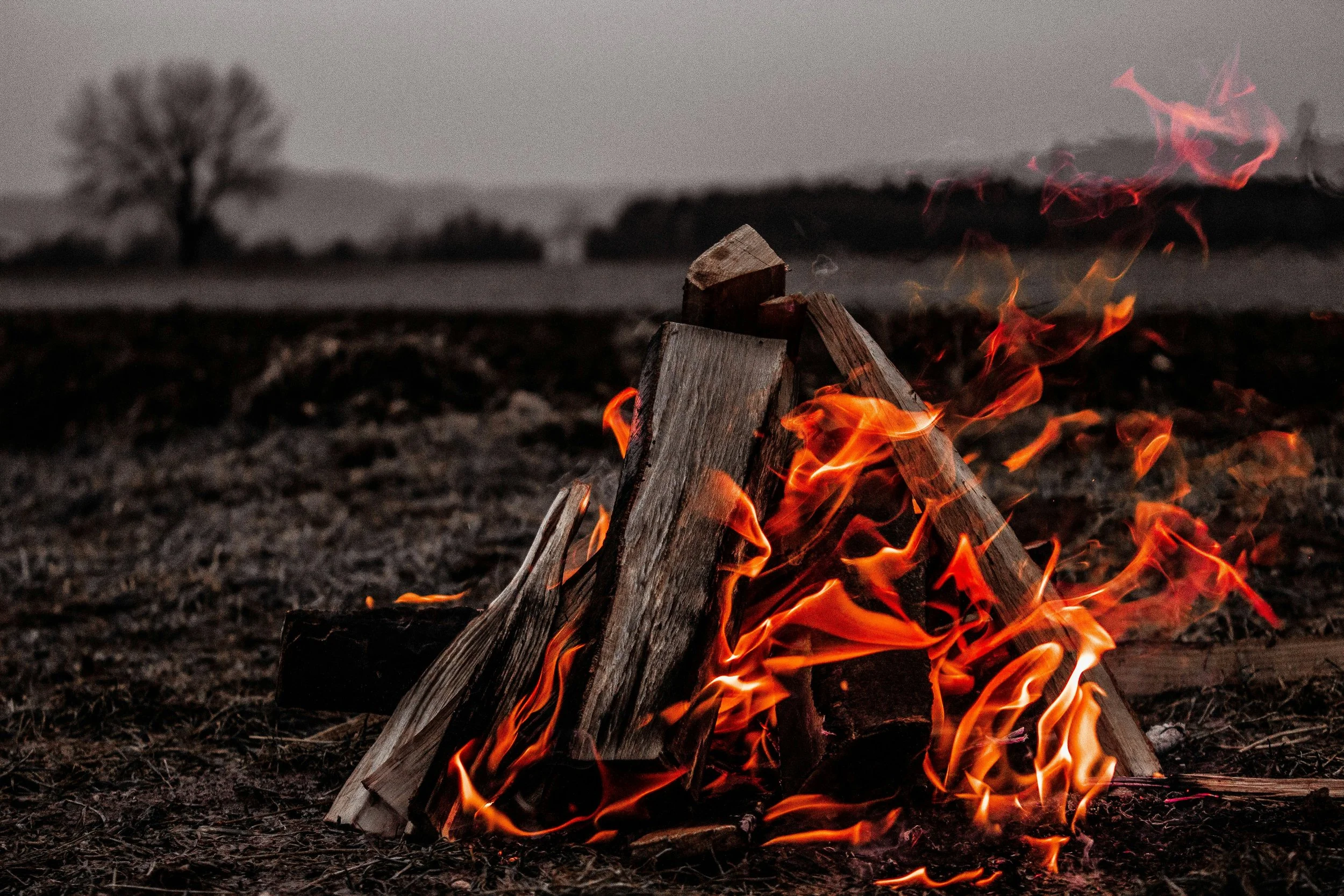
Photo by Marko Horvat on UnsplashFrom what I remember, I originally learned about Salem and the witch trials by watching the movie Hocus Pocus. Not long after, the film, Easy A, challenged my thinking and made me wonder if the trials had more to do with capitalism and a war on free-thinking women than with actual witches. Then, I learned about Tituba while reading The Crucible in high school. It was then that I realized how easily Black women are used as scapegoats while actively being needed to meet a bottom line.
Later in life, I could articulate how uncomfortable I was with hearing only about Tituba in mainstream media. Black women are treated as a monolith, so much so that no other stories of Black women from Salem were deemed worthy of storytelling. And what’s funny is that Tituba was more than likely Indigenous to America, so we can’t even say for sure that she was Black.
Candy and Mary Black are basically the only two Black people you can easily find information on during the Salem Witch Trials. To better emphasize this drastic slight in recognition, Black women were being burned at the stake at a much higher rate than white women.
While many shows and films reenact white women being burned at the stake in this period of time, history opposes this representation. White women were sentenced to hang more frequently than they were sentenced to burn. Whereas, to no one's surprise, Black women were sentenced to be burned more frequently than they were to be hanged.
We know why this is…
It’s difficult to find documentation that accurately recounts Black people's history. Information on Candy and Mary Black is vague and less detailed. This should be unsurprising, but it’s not.
Mary Black was enslaved in Nathaniel Putnam’s household, so it’s very surprising that there was not more documented about the accused occultist directly connected to a leader of Salem Village.
My mind refuted the obvious justification for this slight.
Mary Black Amali
Around April 21, 1692, Mary Black was arrested after John Buxton and Thomas Putnam accused her of witchcraft. Reverend Samuel Paris is believed to have examined her.
During the examination, they asked her to re-pin the cloth around her neck, and when she did, Mercy Lewis, Mary Walcott, and Abigail Williams cried out. They claimed she was actively bewitching them, causing sharp pricks on their skin. Documents even state that Mary Walcott bled from the prick.
Mary was imprisoned and remained there until January 1693. No one attended her trial, and Nathaniel Putnam paid for her release and brought her out of prison.
The Tale of Mary Amali
Mary didn’t know how long she had been rotting away in that cell, but she knew it’d been too long by how wide her belly had grown. Lying on the hard floor with nothing but a cloth to keep her warm in that drafty cell made growing life more grueling than it should’ve been.
She spent many nights scraping a pebble she found in the corner into the ground until one night it had a sharp, pointed edge. The desire to run it along her wrist was strong. She wanted to be done with it all, but she held onto hope for the babies growing in her. Her mama promised she’d live a life of comfort, and despite everything, she still believed in that vision.
Her mama had promised Master Putnam would always look after her. He even promised this to mama—she heard him with her own two ears. The memory of mama and Master Putnam played through her mind more frequently than she wanted.
“She’s your blood, Nat. Promise you’ll do right by her,” mama croaked out.
“I will, Mary,” Nathaniel said to mama.
She stood outside their quarters, listening as her mama took her last breaths while Master Putnam lied through his teeth. She had yet to live that life of comfort he promised her mama.
It wasn’t long after her mama was in the ground that her Menses started. Others around told her to keep it hidden as long as possible, but she didn’t understand the severity of that warning. Soon, Nathaniel called her Mary and spent his nights in her quarters. He instructed everyone else to call her Mary, too, and soon she forgot the name her mama gave her at birth.
Mary spent the nights Nathaniel visited wondering if her mama was actually named Mary. She’d zone out and imagine herself across the sea running through the tall weeds with those mama spoke about. She spun tall tales about them being from a tribe where the women were honored. The Goddess Dunia blessed them with gifts that helped them survive the wild lands. By the time Nathaniel was fixing his clothes and leaving out the front door, Mary had imagined all kinds of adventures running free with her people.
“What gifts do you have?” Nathaniel asked before leaving one night.
“I-I don’t know what you mean, Master,” Mary answered.
Mary knew what he meant, but she didn’t realize he knew. Mama always told her to keep the knowledge of her blessing close to her heart.
“Call me Nat, Mary.” Nathaniel turned from the door and faced Mary. He offered an eerie grin before leaving. The floorboards creaked louder than usual as Mary held her breath, waiting for him to leave.
The drip-drop of water leaking from the cracked lime mortar brought her back to the present. Some nights it served as a rhythmic distraction from the gloom of the cell Mary was in. Other nights the cadence reminded her of the cot squeaking on the nights Nathaniel visited her in her cabin. She hated how the cold of the cell made her body crave his warmth.
Anger had been what kept her warm the first few nights in the cell. She couldn’t believe the Putnams would leave her there to rot after she and her mother brought wealth to their name. They wouldn’t be the leaders of that wretched village had they not used their blessings on them. After a week in the cold cell, her anger transitioned into fear. When weeks passed and her Menses didn’t start, her fear turned to desperation.
She prayed to Dunia every night for a miracle. She came to her in her dreams for the first time and revealed she’d be having twins. That was all she told her.
By the time the twins were fighting for perch, Nathaniel started his nightly visits again. You’d think Mary wasn’t pregnant with his children in a cell by how easygoing he was during the visits. Plus, he refused to even look at her growing belly.
Mary sat up when she heard the bars clanging. She expected Nathaniel to walk in, but he didn’t. They pulled her out of the cell and guided her out of the prison, where she was handed off to Nathaniel. The two walked down the poorly lit path toward his house.
“I’m glad to have you back home, Mary,” Nathaniel said.
It was the last thing Mary heard from him. She darted into the woods. Mary refused to go back to being his disposable pawn. She held the bottom of her stomach as she ran as fast as she could. Her stomach started to cramp, but she wouldn’t stop moving. In no time, there were shouts and distant growls from bloodthirsty hounds from where she had run.
Her foot hit a rock, and she tumbled forward. Her hands planted into the dirt beneath her, stopping her stomach from colliding with the ground. Every emotion surfaced, and she belted out “Dunia!” Desperation, rage, and a deep desire to survive burned through her mind. She pleaded to Dunia, begging for a safe place.
The hounds grew closer, but Mary refused to break. She pushed all her intention into summoning Dunia. She demanded her presence. There was no other option. She’d meet Dunia one way or the other, even if it were in death.
Suddenly, Mary felt reinvigorated. Blue streams of light flooded into her fingertips from the dirt. A warming sensation passed from her hands through her entire body. The twins in her belly kicked as if they were trying to escape. Mary yelled at the intensity of it. When the pain faded, she stopped yelling and could only hear the sound of crickets. A hand reached forward and lifted her off the ground.
“What should I call you?” Dunia asked.
Mary was nearly blinded by how bright Dunia glowed. Her dark skin radiated the sun's warmth. Her presence was so vast it was suffocating. Her energy felt like everything you loved and hated. She was everything and nothing at all.
“Amali,” Mary answered without thought.
“Ahhh… Hope.” Dunia responded.
A memory of Mary’s mom chanting “Amali Amali Amali” resurfaced. “Never lose Hope,” her mom would say.
“The Realm of Amali,” Dunia announced.
Mary followed where the goddess gestured and noticed the space around them was more alive than it was a minute ago. Fireflies lit the space around them. The dead leaves on the trees were now vibrant green, and the stream of water cascading in the distance had a glowing blue hue.
The goddess began speaking again, but it was hard for Mary to focus on what Dunia was explaining when a contraction started.
“You must teach this prophecy to your children, or all will be lost. Do you understand?” the goddess asked.
Mary nodded in agreement. Another contraction came on, and she closed her eyes to brace for the pain. When she opened them again, Dunia was gone. Soon after, Mary Amali became a mother to two.
More Reads About Black Women in the 1600s
Enslaved: Peoples of the Historical Slave Trade. (2024). Enslaved.Org. https://enslaved.org/fullStory/16-23-126811/
Christ, R. (2022, February 18). Remembering Candy and Mary Black. Salem Witch Museum. https://salemwitchmuseum.com/2022/02/18/remembering-candy-and-mary-black/
SWP No. 015: Mary Black - New Salem - Pelican. (n.d.). Salem.Lib.Virginia.Edu. Retrieved October 5, 2026, from https://salem.lib.virginia.edu/n15.html
The Original Black Girl Magic: Meet The Black Woman Who Ignited The Salem Witch Trials. (2023, October 31). Essence. https://www.essence.com/news/black-woman-salem-witch-trials-tituba/
Opinion | The historical truth about women burned at the stake in America? Most were Black. (n.d.). Washington Post. Retrieved October 5, 2026, from https://www.washingtonpost.com/opinions/2022/02/25/black-women-history-burned-at-stake/
Gross, K. N. (2022). The Historical Truth About Women Burned at the Stake in America? Most Were Black. Bunk History. https://www.bunkhistory.org/resources/opinion-the-historical-truth-about-women-burned-at-the-stake-in-america-most-were-black
Photo by Kofi Nartey on Unsplash